

How Hypnosis Can Help You
Is there an area of your life where things just don’t seem to move — no matter how hard you try?
Chances are, there’s a fear or a belief running underneath it that you’re not even aware of. Something is operating quietly, on autopilot, steering things from below the surface.
That’s exactly where hypnosis comes in.
Science recognizes hypnosis as a method for creating new neural pathways in the subconscious mind. In turn, this can change the quality of your life.
It can help you:
- Move through fear, phobias, and old anxieties
- Release stress and restore inner balance
- Break patterns in your life that keep repeating, no matter what you try
Why willpower alone isn’t enough
Here’s the part most people never learn: only about 10% of your mind is conscious. The other 90% is subconscious — and it’s running the show.
So you can consciously want to change something. You can decide to create it. You can even do everything “right” on the surface. And still, it doesn’t happen. That’s because thinking positively and taking action often isn’t enough on its own. After all, that hidden 90% can be quietly working against you — and you’d have no way of knowing.
Most subconscious beliefs form in early childhood, often without any major trauma behind them. Sometimes all it takes is a single sentence a child overhears. They quietly decide it means something about who they are or what’s possible for them. We also absorb beliefs from our family of origin and from the collective — the social norms about how things “should” be. Over time, these beliefs begin running our lives without our permission or awareness.
Hypnosis is how you find those beliefs and blocks — and reprogram them.
Modern life tends to worship the conscious mind and ignore the subconscious almost entirely. Imagine living in a ten-room house but only ever setting foot in one room. You never even glance into the other nine. Strange, right? Yet that’s how most of us live — usually out of simple unfamiliarity, sometimes out of a quiet, unconscious fear.
There’s nothing to be afraid of or ashamed of here. In fact, every single person carries subconscious blocks, fears, and beliefs that no longer serve them — professors, presidents, the wealthy, the famous, and everyone in between. So wherever you are in life right now, getting to know your subconscious and shining light on those old beliefs can genuinely help.
A method older than the name
Working with the subconscious isn’t new. Hypnosis is simply one of the oldest known approaches, going back thousands of years. The word itself only dates to the 17th century. However, ancient Egyptians, ancient Greeks, and many indigenous cultures used similar practices to reach altered states of consciousness — early forerunners of what we now call hypnosis. By the 18th century, physicians, surgeons, psychiatrists, and psychologists were already using it clinically. As a result, the British Medical Association formally endorsed hypnosis as a therapeutic tool in 1892. Today, doctors in the US still use hypnosis to support people through childbirth and recovery after surgery.
What actually happens in a hypnosis session?
Hypnosis helps you relax. In that relaxed state, you become open to new, empowering beliefs. Think of it as installing new software into the subconscious — creating new neural connections that shift how your mind runs your life. It can support you in overcoming fear, phobias, and addictions. It can also strengthen your health, relieve stress and sleep issues, boost performance in sports or study, break recurring patterns, and build confidence, courage, and trust in yourself.
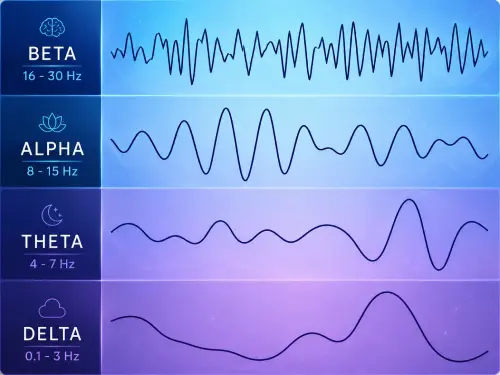
During hypnosis, you enter a deeply relaxed state — somewhere between waking and falling asleep. Your brainwaves slow down, mostly into the alpha range but also toward theta. This naturally makes you more receptive to positive suggestion. In ordinary daily life, we mostly operate in the beta range — thinking, planning, worrying about the past or the future. In hypnosis, though, your brainwaves slow into alpha, theta, and even delta.
“What if I can’t be hypnotized?”
Hypnosis works on almost anyone in good mental health. The belief “I can’t be hypnotized” almost always comes from simply not knowing what hypnosis actually is or what it feels like. That’s why, before any session begins, I walk you through exactly what to expect — so there’s no mystery and nothing to worry about.
Is hypnosis safe?
Completely. In fact, you experience a version of hypnosis every single day — as you drift off to sleep and as you wake up. You never lose consciousness. You can hear everything happening around you. And you can come out of the state any time you choose. In short, no one can ever use hypnosis against your will.
How to book a session
Your first session usually takes about 2 hours; sessions after that run 1–1.5 hours. To get started, email andra@andrasaimre.com with a short note about what you’d like to work on.
FAQ
Hypnosis is a deeply relaxed state — somewhere between waking and sleep — where the subconscious mind becomes more open to positive suggestion. It creates new neural pathways and helps shift beliefs that run quietly beneath conscious awareness
Hypnosis can help with fear, phobias, stress, sleep issues, addictions, repeating negative patterns, low confidence, and performance in sports or study. It works by addressing the subconscious mind, which drives roughly 90% of behavior.
Yes. You never lose consciousness, You remain aware of everything happening around you, and you can exit the state at any time. No one can use hypnosis against a person’s will.
Anyone in good mental health responds well to hypnosis. Most doubt about this comes from not knowing what the experience actually feels like — which is why every session starts with a clear explanation of what to expect.
Yes. Physicians have used hypnosis clinically since the 18th century, and the British Medical Association formally recognized it as a therapeutic tool in 1892. Doctors still use it today, including to support people through childbirth and surgery.
The first session usually takes about 2 hours, since it includes an intake conversation. Follow-up sessions typically run 1–1.5 hours.